"Blether - n. foolish chatter. - v.intr. chatter foolishly [ME blather, f. ON blathra talk nonsense f. blathr nonsense]" - Concise Oxford Dictionary.
Showing posts with label books. Show all posts
Thursday, February 23, 2017
Rummaging in the cyber past
I retired over 11 years ago. After all these years of teaching English I found I was missing the discipline of writing - for when I set essays, particularly to senior classes, I tended to write one myself. It was something I liked to do, to contribute to the discussion, as well as believing you shouldn't ask people to do something you weren't prepared to do yourself. At the time, blogging was pretty new - and it was really the only shared form of communication, the first step in what we learned to call Social Media. My sons were already blogging. I was seduced.
And it was in that first year of blogging that I began to meet people outwith my own circle (there - Blogger doesn't like "outwith" any more than it ever did), several of whom were (another new word at the time) edubloggers. Some of them were Scots, so that I met them physically in Glasgow ("You're Blethers, aren't you?"); some were much further away. And one of the more distant edubloggers I also met, and it's a good story.
I can't remember the exact sequence of events, but it was in November 2006 that I blogged about my input into the classroom work of Anne Davis - allowing her to use my photos as a classroom resource for creative writing, commenting on some of the pupils' work, thoroughly enjoying that little bit of teaching again. Three months later, we met - in San Francisco - thanks to Ewan's social engineering. We were on a month's tour of our American friends, one of whom had just dropped us off at our SF hotel. The cases had just appeared, when the phone rang. You don't expect anyone to phone you in a strange city - but it was Anne, also in town for a conference. Could we meet for dinner? And we did, and you can read a short blog post about it, though it doesn't mention my recording a podcast for her pupils.
But I must tear myself away from this nostalgic wandering among the archives. The reason I'm doing it appears in the photo at the top: Anne sent me this book that she and a colleague, Ewa McGrail, have written (and it costs a fortune to send a book from the USA) and it has the most lovely dedication on the front page and several references to me, all wonderfully flattering, scattered throughout the text. I'm delighted to get it, and to relive that time - which in many ways feels like another life. Even this blog post, full of links that take ages to find because I keep reading what I'm rummaging among, reminds me of that era.
Now, of course, it's all short-form communications. Social media rules, and the most unlikely people turn up on Facebook. Blogging is much less of a thing. And yet ... I find myself returning to blethers when I want to say something longer than a sentence, or something that I haven't got a proper photo for (because Blipfoto seems to have turned into my regular blog spot, in a strange way - maybe because of the interest of photographers). And when I was reading the book this morning, and reflecting on how I'd celebrate its arrival, I thought about children's writing and the joy of having it read by more than just the classroom teacher - to say nothing about having comments added by outsiders.
Children - and we've been talking primary school pupils throughout this - still love to have their best work displayed on the classroom wall. There is a place for this sort of controlled online interaction - on the much bigger wall, as it were, of the internet. This book, Student Blogs, seems to me to cover so many of the areas that might worry the cautious teacher - everything from accessing photos to Creative Commons and beyond - as to encourage any teacher to have a go.
Unless, of course, no-one can write more than 140 characters at a time these days. Just like The President ...
Monday, July 28, 2014
Summer reading
What have I been reading recently? Nice of you to ask - I have been reading more than I might, because it's been the kind of weather that allows you to read outside, and I'm an outdoorsy sort who can't bear to sit in if the sun's shining or even if it's not and ... and ... Enough. Right now I've started on Lucretia Grindle's The Lost Daughter and I'm enjoying it hugely, in the way you do when you've read several of an author's books and settle comfortably into the environment - in this case Florence - and the characters (Italian cops) you've met before. I continue to be slightly irritated by the writer's tick of consigning adjectival clauses to a separate sentence more than once (once is fine, but it's too distinctive a trait to use more often), but she writes a good tale and the setting is terrific.
I'll not go on about that, however, because I'm just settling in - though I may return for a final thought. Before embarking on the Grindle I was reading the deeply unsettling The Disappeared, by Kim Echlin. Set in Canada and Cambodia, this is a story of the Killing Fields, so I'm now considerably more clued up on Pol Pot and the horrors of that era than I was in the 70s, when I was too preoccupied with bringing up children. As I shall be visiting Cambodia and Vietnam next year, it seemed a good way for a fiction fiend to pick up some history, and a pretty ghastly history it is. Echlin writes in an elegiac way that incorporates Cambodian words into her dialogue and reflects the music that brings the lovers of her story together, but under the poetry of her language is an undercurrent of tension that meant I sometimes had to stop reading (at bedtime, usually) before I was ready to.
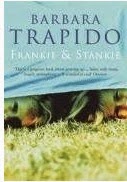
I read another thought-provoking book in Frankie and Stankie, by Barbara Trapido. This is a delightfully-narrated account of growing up in the South Africa that existed while I was a child, the South Africa of growing apartheid seen through the eyes of the child of white liberals who nevertheless mingled with the rest of white society - though they took a dim view of the Afrikaaners, whom they saw as boorish country clods. The child-like clarity of the prose means that events happen without necessarily being interpreted; with our hindsight we are able to see how things gathered their own ghastly momentum and changed a world even as its inhabitants watched. I'm glad to have read it.
And then there was the appropriately seasonal Instructions for a Heatwave, by Maggie O'Farrell. This is the story of a family, beautifully and lovingly told, with fascinating flashbacks gradually explaining what is happening and making it possible for the family to continue. I especially enjoyed the seemingly effortless mastery of the writer, the firm grasp of tense, the fine strokes of characterisation. Set in the heatwave of July 1976 - a heatwave in London which was not, I can tell you with all the authority of a diarist, a heatwave in Dunoon - the writer keeps the heat there, oppressively present without being over-described, so that you are constantly aware of the difficulties of coping rationally with any crisis. I saved this one up for the appropriate season, and it went down a treat.
And now, chums, I'm away back to Florence. I'm not after all going to say any more till I'm finished. The sun is shining in the garden and I want to read ...
Thursday, December 06, 2012
Warmth, light and love: the Advent journey
If you're really old - a silver surfer par excellence - you might remember this book: Footprints in the Snow, by the author with the unlikely name of Racey Helps. It seems to have been the first book he wrote, in 1946, and I must have been an early fan. (No, I couldn't read in 1946, but ...). I was thinking, as I wrote my last post about Advent, about what it is that we feel in this season, and it was when I was musing that it is certainly not a feeling confined to Christians that the memory of this book surfaced.
Today as I write the darkness of the early night has already engulfed us at 4.30 in the afternoon. It has been a foul day, and though the weather this week has until now been sunny and cold, it was threatening - the menace of black ice under the sun, the stubborn slush that would have you upended in a trice. It gives me pleasure to have returned to my warm house, to put on lights and fires - central heating isn't enough: I need orange flames to complete the setting - and to be safely inside for the evening. Better, we are expecting friends to come round and sing with us, sing Advent music and enjoy the shared experience.
That is a particular instance, fixed very specifically in time and place and inclination. The child's book above reaches the same area of contrast: that which separates cold, wet darkness, loneliness and threat from warmth and love. From my memory, the little anthropomorphic characters with names like Millicent, Barnaby and Nubby Tope (that's the mole) find themselves frightened and menaced on a cold winter night and end up warm and safe and loved. It happens all over the place - in Wind in the Willows, The Lion, the Witch and the Wardrobe, even in Spooks (MI5 HQ being the safe hub where danger only rarely and shockingly obtrudes and usually happens outside). And it is there, I believe, at the heart of what happens in Advent, and particularly poignantly when Advent is experienced in the cold darkness of a northern winter.
That's where the rush to put up lights, to flock to warm, cheerful shops, to drink in cosy pubs comes from especially strongly at this time. The world is a hard place, but we can crowd together in a communal setting that will give us the illusion at least of being part of a group; we buy presents and send greetings and when these are reciprocated we have the warm glow of ... love? And whether it's real or commercialised, people feel the need for it, feel this need always but especially in the dark times. If we are mature participants in a tradition that says wait, prepare, sense the darkness because of what you know will come, don't try to break it too early, then we savour the possibilites of our tradition to nurture our need and supply us with the realisation of love that did come, that does come. But if we are so wretched because of our physical situation, or our emotional or mental state, it can be harder to feel beyond the loneliness and threat of the season - and that's when the stories come in.
I loved that little book Footprints in the Snow. I can remember reading it, in my bed, in the winter - and I cannot recall reading it on a light summer evening. Very early, I think, I realised the attraction of the warmth and light and love at the end of a hard journey. I believe we are all like this, and we are all searching, whatever we believe, for just that: warmth, light, love. If we can help to provide that as well as need it, we are doing well.
Today as I write the darkness of the early night has already engulfed us at 4.30 in the afternoon. It has been a foul day, and though the weather this week has until now been sunny and cold, it was threatening - the menace of black ice under the sun, the stubborn slush that would have you upended in a trice. It gives me pleasure to have returned to my warm house, to put on lights and fires - central heating isn't enough: I need orange flames to complete the setting - and to be safely inside for the evening. Better, we are expecting friends to come round and sing with us, sing Advent music and enjoy the shared experience.
That is a particular instance, fixed very specifically in time and place and inclination. The child's book above reaches the same area of contrast: that which separates cold, wet darkness, loneliness and threat from warmth and love. From my memory, the little anthropomorphic characters with names like Millicent, Barnaby and Nubby Tope (that's the mole) find themselves frightened and menaced on a cold winter night and end up warm and safe and loved. It happens all over the place - in Wind in the Willows, The Lion, the Witch and the Wardrobe, even in Spooks (MI5 HQ being the safe hub where danger only rarely and shockingly obtrudes and usually happens outside). And it is there, I believe, at the heart of what happens in Advent, and particularly poignantly when Advent is experienced in the cold darkness of a northern winter.
That's where the rush to put up lights, to flock to warm, cheerful shops, to drink in cosy pubs comes from especially strongly at this time. The world is a hard place, but we can crowd together in a communal setting that will give us the illusion at least of being part of a group; we buy presents and send greetings and when these are reciprocated we have the warm glow of ... love? And whether it's real or commercialised, people feel the need for it, feel this need always but especially in the dark times. If we are mature participants in a tradition that says wait, prepare, sense the darkness because of what you know will come, don't try to break it too early, then we savour the possibilites of our tradition to nurture our need and supply us with the realisation of love that did come, that does come. But if we are so wretched because of our physical situation, or our emotional or mental state, it can be harder to feel beyond the loneliness and threat of the season - and that's when the stories come in.
I loved that little book Footprints in the Snow. I can remember reading it, in my bed, in the winter - and I cannot recall reading it on a light summer evening. Very early, I think, I realised the attraction of the warmth and light and love at the end of a hard journey. I believe we are all like this, and we are all searching, whatever we believe, for just that: warmth, light, love. If we can help to provide that as well as need it, we are doing well.
Tuesday, April 06, 2010
Sacred Hearts and their secrets
Set in the convent of Santa Caterina, in 1570 Ferrara, the novel tells the story of one reluctant novice and her fight to escape the prison of convent life to which she has been condemned by her father after an unsuitable love affair. Her mentor, the scholarly Suora Zuana, works in the dispensary, and we see the story through her eyes and through those of Serafina, the novice, although the use of 3rd person narrative keeps a certain distance and balance.The sense of convent life unfolding inevitably is intensified by the use throughout of the present tense - there is no feeling that anyone in the novel already knows what has happened in this momentous year; no omniscient narrator to hold our hands as the changes in the Church threaten the stability of what some might see as a home for women who are brides of Christ only because they have not become brides of anyone else.
Dunant again creates a believable picture of life in Renaissance Italy in what one critic described as "A rip-roaring tale in which gutsy vulgarity and ferocious academic intelligence go hand in hand". She also shines a probing light on such fascinating topics as holy anorexia, lesbianism among nuns, pre-modern teenagers and music in convents at this period. But in among all this scholarly knowledge there is a sixteen-year-old girl who could belong to this century in the turbulence of her emotions and her rebellious spirit, whose attitude to the faith she is supposed to embrace would seem familiar to many of us. And, despite the odd syntactical glitch, it's an absorbing read. I couldn't put it down.
Saturday, March 06, 2010
Illuminating the Lighted Rooms
I've been reading Richard Mason's The Lighted Rooms - a book which might have appealed to me solely by its Larkin-inspired title had it not been lent to me for my recent holidays. An unusual study of dementia, it was at once gripping and illuminating - and no, that's not a pun - though occasionally the familiarity of a situation described would have me wincing in recognition. This was particularly true, I think, in the description of the expensive nursing home in which Joan, one of the main characters, takes up residence - all the "advantages" which distinguish such establishments from the hotels they seek to emulate add up to a prison in Joan's eyes and are so well described as to make any reader uncomfortable.And yet this story conveys not pathos but a kind of joyous heroism, as Joan makes easy friendships with two very different young men, inspiring their loyalty and gratitude in a way which her competitive and successful daughter cannot. On the way to the"triumphant serenity" achieved by Joan at the novel's end, we learn about such diverse subjects as British concentration camps in South Africa during the Boer war and the operation of hedge funds, but it is in the illumination of the "Lighted Rooms" that Larkin thought might make up the sum of consciousness of old people that Mason's chief accomplishment lies. It seems not quite right to say I enjoyed the book, but I was riveted by it and recommend it wholeheartedly. And if you're looking for a Book Group subject, there are some helpful suggestions for discussion at the end.
Wednesday, February 03, 2010
The Book Thief
I've just finished reading The Book Thief by Markus Zusak. And I mean "just finished", which means that I'm still steeped in the smoke of burning Himmel Street in a small German town as the second world war turned against Germany, still caught in the mesh of words echoing the words of the book thief herself, regretful and bereft because it's finished.This book is beautifully written. It's quirky and unusual and the narrator is Death - a narrator you soon learn to trust utterly. It tells of the wartime experience of a young girl, living with foster parents, learning to read after she steals her first book. In the end her books and her writing save others, save herself and have a profound effect on Death himself.
It's the best book I've read in ages.
Friday, February 06, 2009
Setting a President
Just before I left home, I finished reading Dreams from my Father by Barack Obama. I had to finish it because I was gripped in a way I don't normally associate with my reaction to biography, a genre which I tend to be able to read in parallel with a novel, on a pick up/put down basis. But this isn't your usual kind of biography - and not just because the writer has just become scarily powerful.Two things struck me forcibly right from the start. The first was that this was a really good piece of writing: an effortless syntax; the easy integration of direct speech and dramatic narrative with recollection and reflection. The second was a profound relief that someone so reflective and self-aware, so luminously intelligent, had been elected to succeed Dubya, to whom I wouldn't apply any of the foregoing descriptions.
The book falls into three sections - Obama's childhood in Hawaii and Indonesia, his time in New York and Chicago, and his visit to Kenya. His family background is fascinatingly complicated, and when he is in Kenya meeting half-brothers and great-uncles, we realise why his take on race and colour is as sophisticated as it is. I found the Kenya experience strangely unsettling in its otherness, conveyed, it seemed to me, in a mood of passive acceptance: I had little sense of the American in Obama's reaction to the lives of his family, even when some family firewater renders a subsequent bus journey nightmarish.
The book ends with his marriage and a looking forward to a life lived in increasing self-knowledge. I shall read the second book later in the year, but right now it will be fascinating to watch this African American's presidency develop. Will he write about it?
Tuesday, May 13, 2008
Another good read

I've been reading another book by Mark Haddon, A Spot of Bother. Like his bestseller, The Curious Incident of the Dog in the Night-time, this is a painfully funny book, the story of family at a turning point, but primarily the story of George. George, fifty-seven, recently retired, is looking forward to a peaceful time of self-fulfilment when his daughter announces that she is about to remarry (her prospective husband has, according to her brother, "strangler's hands"). Said brother, Jamie, fears that to bring his lover Tony to the wedding will expose him to the awfulness that he has so far managed to avoid, and George's wife, Jean, finds her affair with a former colleague of George threatened by all this family activity.
But it is George's problem which preoccupies him and us. For George has discovered a sinister lesion on his hip and - as the blurb puts it - quietly begins to lose his mind. He becomes convinced that his doctor is incompetent and decides to treat himself. The resulting chaos is of an order to leave you simultaneously sniggering helplessly and cringing.
Haddon's style is well suited to this kind of writing. He makes a feature of the short sentence and the one-sentence paragraph, as well as the grammatical non-sentence - features which, once noticed, could irritate but which in this case do not. He has a wonderful way with climax, taking us along a path we know we have to follow without the slightest idea what waits us at the end.
I loved this just as much as The Curious Incident, and probably for the same insight into strange mental states. I almost wish I'd saved it for a holiday.
Thursday, December 13, 2007
Arthur & George
I've just finished reading Julian Barnes' book Arthur & George. Normally when telling people how to write a decent critical essay I'd tell them to include the genre of the piece under discussion in this opening sentence, but I'm slightly foxed by this one. It's based on what happened when a young lawyer of mixed Parsee/Scottish parentage (the George of the title) was imprisoned for what seemed like a very unlikely crime and on his release had his case investigated by Sir Arthur Conan Doyle of Sherlock Holmes fame.I thoroughly enjoyed reading this. The writing is wonderfully polished, the observation acute, the insights fascinating. It has all the hallmarks of fiction - the direct speech, the glimpses into unspoken thoughts, even the omniscience on the part of the author that can annoy if one is looking for a constant perspective, or even a two-way split as suggested by the title. And yet it is not fiction, insofar as the story is concerned. I think this is why I felt somewhat stranded by the conclusion, even though the narrative in the closing pages is among the most gripping of the whole book.
However, most of the time I felt involved in a Holmesian mystery - and found that the parallel lives offered respite to a reader who tends to fall asleep in mid-page, in that the chapters, especially in the early stages, are brief and let us gradually come to know Arthur and George as they grow up. And even when we feel we know George in this fashion, there is always something not told - so the outcome is by no means predictable.
And the insights into the famous author's personal life are revelatory!
Friday, September 14, 2007
Late hols, anyone?
This rather miserable little image is partly the result of my not being chez moi - don't like to fiddle too much with a strange Mac to get what I want. However, the book I've just finished reading, Late Season by Christobel Kent, was just what I wanted for a holiday read. This is the second book I've recently read by this author, the other being "The Summer House". Both are set in Tuscany, and both show a dark side of the backdrop to a thousand holidays.Kent uses an obvious but nonetheless successful technique in both novels - and perhaps in others. Each follows two stories - one of incomers to the region, one of the residents who observe them. This allows for the two viewpoints to develop, increasing our interest as we wait to learn how the characters will eventually interact. She uses the device of flashback to flesh out the characters, and in "Late Season" a certain suspension of disbelief is asked of the reader as the denouement reveals convoluted relationships. But the end-of-season sadness, present even as the sun shines, is beautifully captured, the details of life in a holiday house real and compelling, and the tensions among a group of friends, one of whom is dead a year before the story opens, subtly developed.
Kent writes well and tells a good tale. The result is an above-average holiday read. All right, all right - I know you're all back at work!
Friday, July 13, 2007
Interesting bedfellows
Having submitted Mr B to the torments of the barbecue the other night, I feel moved to give pride of place to his bon mot of yesterday. Contemplating the level of our involvement in the church, he was heard to observe that it was like participating in the series Rome only without the sex.

I have to say that I'm a fervent follower of the series - and was gutted to find I hadn't recorded the Battle of Philippi because T in the Park over-ran but got it last night - and am now going to devote some serious research to a comparison of the two genres. Only thing is - I fear Susan Howatch got there first - may I recommend her "Starbridge" novels to any of my readers who haven't already devoured them?

I have to say that I'm a fervent follower of the series - and was gutted to find I hadn't recorded the Battle of Philippi because T in the Park over-ran but got it last night - and am now going to devote some serious research to a comparison of the two genres. Only thing is - I fear Susan Howatch got there first - may I recommend her "Starbridge" novels to any of my readers who haven't already devoured them?
Monday, May 14, 2007
Words, words, words:book tag
Stewart tagged me about books. Quite daunting, in a way, but here goes:
How many books do you own?: Far too many. I don't actually know and I'd have to spend ages counting, but at a rough guess I'd go to about 1,000. More than 5 anyway - I believe that was the limit of primitive people's reckoning.
Last book I read: Don't let's go to the Dogs Tonight by Alexandra Fuller. A wonderfully bleak and evocative picture of a childhood in Rhodesia as it went through the painful process of becoming Zimbabwe.
Lord of the Rings has to come first, despite the rather predictable nature of such a choice. I first read it forty years ago (Oh dear) during what I still look back fondly on as my last "proper" illness: I was still living at home, working in my first teaching job, and caught a cold which ended up as bronchitis. I stayed in bed for the eight days it took me to finish the book, getting up in the evenings to avoid starting another section too late in the day. My mother brought me cups of tea and tempting little meals. Bliss! But now I can't read any of it without recalling the wonderfully addictive sensation of the cough medicine I had to take.
Peter Abelard by Helen Waddell. I love the evocation of mediaeval Paris and the way the characters slip in and out of Latin in the dialogue. There is a wonderfully moving example of the patripassian heresy in the book, as well as the darkness in men's hearts.
The Heart of the Matter by Graham Greene. Actually I love Greene's books, but this is one that I taught to a Higher class once and so came to know it really well. Its structure is fascinating and the imagery wonderful - and that's before you consider the story itself. Years later a student in another Higher class chose it for his Review of Personal Reading and became so obsessed by it that he was in danger of neglecting his other work. He did rather well, I remember.
The Collected Poems of R.S.Thomas. I suspect this tag may be about novels, but as it doesn't say so I'm ignoring the suspicion. Thomas' poetry is taut, bleak, moves me to tears with some lines (usually the final two in a poem) and has been instrumental in developing my own theology over the years - to say nothing of my own poetry writing.
The King Must Die by Mary Renault. I read this long before I first visited Crete, but on the seven occasions on which I have since stayed on the island I have found myself thinking of its powerful evocation of the ancient world of the bull dance and the labyrinth.
And of course this list leaves out the hundreds of books I've enjoyed over the years - the Pyms, the Howatches (before they became so formulaic), the Hornblower books, the Auels, the Sharpe books, the Conan Doyles, the Edmund Crispins and the Michael Inneses which were my introduction to detective fiction ... I fondly salute them all.
And I tag : Di, Kimberly, Andrew (because I'm sure he spends too much time over a computer), Neil and Ewan because it was the dickens of a job to get him to read any fiction in his formative years.
Subscribe to:
Posts (Atom)