Showing posts with label reading. Show all posts

Monday, July 28, 2014

Summer reading

What have I been reading recently? Nice of you to ask - I have been reading more than I might, because it's been the kind of weather that allows you to read outside, and I'm an outdoorsy sort who can't bear to sit in if the sun's shining or even if it's not and ... and ... Enough. Right now I've started on Lucretia Grindle's The Lost Daughter  and I'm enjoying it hugely, in the way you  do when you've read several of an author's books and settle comfortably into the environment - in this case Florence - and the characters (Italian cops) you've met before. I continue to be slightly irritated by the writer's tick of consigning adjectival clauses to a separate sentence more than once (once is fine, but it's too distinctive a trait to use more often), but she writes a good tale and the setting is terrific.

I'll not go on about that, however, because I'm just settling in - though I may return for a final thought. Before embarking on the Grindle I was reading the deeply unsettling The Disappeared, by Kim Echlin. Set in Canada and Cambodia, this is a story of the Killing Fields, so I'm now considerably more clued up on Pol Pot and the horrors of that era than I was in the 70s, when I was too preoccupied with bringing up children. As I shall be visiting Cambodia and Vietnam next year, it seemed a good way for a fiction fiend to pick up some history, and a pretty ghastly history it is. Echlin writes in an elegiac way that incorporates Cambodian words into her dialogue and reflects the music that brings the lovers of her story together, but under the poetry of her language is an undercurrent of tension that meant I sometimes had to stop reading (at bedtime, usually) before I was ready to.
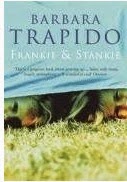
I read another thought-provoking book in Frankie and Stankie, by Barbara Trapido. This is a delightfully-narrated account of growing up in the South Africa that existed while I was a child, the South Africa of growing apartheid seen through the eyes of the child of white liberals who nevertheless mingled with the rest of white society - though they took a dim view of the Afrikaaners, whom they saw as boorish country clods. The child-like clarity of the prose means that events happen without necessarily being interpreted; with our hindsight we are able to see how things gathered their own ghastly momentum and changed a world even as its inhabitants watched. I'm glad to have read it.

And then there was the appropriately seasonal Instructions for a Heatwave, by Maggie O'Farrell. This is the story of a family, beautifully and lovingly told, with fascinating flashbacks gradually explaining what is happening and making it possible for the family to continue. I especially enjoyed the seemingly effortless mastery of the writer, the firm grasp of tense, the fine strokes of characterisation. Set in the heatwave of July 1976 - a heatwave in London which was not, I can tell you with all the authority of a diarist, a heatwave in Dunoon - the writer keeps the heat there, oppressively present without being over-described, so that you are constantly aware of the difficulties of coping rationally with any crisis. I saved this one up for the appropriate season, and it went down a treat.

And now, chums, I'm away back to Florence. I'm not after all going to say any more till I'm finished. The sun is shining in the garden and I want to read ...

Saturday, December 31, 2011

Round-up

Last read of the year
I realise, through the Lemsip-induced haze of another cold, that I've been remiss in reviewing books recently. It's not that I've given up reading - nothing can replace that comfortable joy of having a good book on the go - but simply that other things, usually music, family or church, got in the way. So here, on the last day of the year, is a round-up of stuff I've read recently.

Unless, by Carol Shields, was an odd book. It was beautifully written, and I enjoyed reading it immensely - but realise, at several months' distance, that I had to check the Amazon review to remind me of one of the threads. But I loved the involvement in the mind of writer heroine Reta, her anxieties about her eldest daughter who drops out of university and sits on a street corner in Toronto with a placard saying "Goodness", her tussles with her insensitive publisher, and I was completely convinced by her wonderful conversations with her friends.

After that, I had a quick scamper through some old Penguins. Sweet Danger and The Crime at Black Dudley, both by Margery Allingham, convinced me that I was right to consider The Tiger in the Smoke the best I've read of her books - the style remained seductive, but the plots were pretty daft. They were really old Penguins too - the original green and white covers, with yellowing pages, foxed at the edges.

One of my birthday books I had added to my wish list purely on the grounds of its Amazon description. The Stranger's Child, by Alan Hollinghurst, is a great tome (I read it in hardback - quite risky reading in bed when sleepy, lest it fall on one's nose) covering the span of almost a century with complete conviction and mastery. In one sense, it is a novel about a biography - a biography of someone we have already met in the opening chapters, just before the outbreak of World War 1. But it is also about Englishness, and about how people change over time, and about manners and customs and society ... and it is beautifully written and just challenging enough to keep me flipping back to check my memory against that of various protagonists.

Then I was lent A.D. Miller's Snow Drops as a suitably small paperback for a plane journey. This kept me riveted for two flights and the time in between, and I agreed with the reviewer who said it 'reads like Graham Greene on steroids'. Snowdrops are apparently the corpses that appear when the snow of the Russian winter melts, and the winter in Moscow is as much a character in this story of love and betrayal as Nick , the English lawyer, and Masha, the Russian girl he loves. The writer used to be The Economist's Moscow correspondent, and he convinces with every word. As I look forward to a trip to Russia in the coming year, I can't help wondering if 'grandma's summer' will be over and the cold air will already be threatening the winter to come...

I finished the year with another Josephine Tey, having so unexpectedly enjoyed The Franchise Affair. I had tried The Daughter of Time in my teens - I have a feeling my mother gave me it when I was off school with some bug - and completely failed to become interested in this tale of a convalescent detective solving the mystery of Richard the Third from his hospital bed. Who killed the Princes in the Tower? Perhaps they weren't killed at all. Was Richard the horror depicted by Shakespeare? Check the origin of his sources. The book is intricate, painstaking and fascinating. I shall never look at history in the same way again. The mature me loved it, and I finished it yesterday. The picture above is of the edition - now 50 years old - that I read; it seems to me a suitable illustration for an end-of-year blog post.

I have now started one of my Christmas books - two pages of The Girl who kicked the Hornet's Nest already have me feeling more cheerful about this wet Ne'erday - and there are others waiting in the wings. Now, off the computer and back to the books ...

Sunday, January 24, 2010

Loudly reading

I was interested to read Neil Winton's post t'other day, and follow through to this post from Bill Boyd - both of them on the importance of reading aloud in the development - and the proof - of literacy skills and understanding of texts. They coincided with my own leading of a short workshop for adults who read aloud - or might want to read aloud - in the context of a church service, and because I'd been thinking about my teaching days after reading the blogs, I think I hit the ground running in a way I might have forgotten about.

Of course, a big hurdle in reading the Bible - in any version - is the sheer complexity of much of it. And perhaps nothing catches out the unwary reader in quite the same way as Paul's letter to the Hebrews, parts of which have begun to appear in the lectionary right now. With my sights firmly on the person who will have to tackle this next Sunday, I decided to base my teaching on just such a passage. The first sentence was five lines long, with crucial punctuation and a wandering "because" that belonged firmly, but to the unwary surprisingly, to the principal clause which followed later in the sentence. (Gosh: that sentence I've just written would be murder to read, huh?) It was great to see pennies dropping about changes in meaning if you got the "because" in the wrong tone of voice, or the destruction of meaning if you came to a halt before the end of the sentence; about the cause of this last fault in the shortness of breath of someone who doesn't know about support and voice production.

The best moment came when we were all ready to have a go at this passage. We'd talked a bit about the difficulty of church acoustics and the deaf lady who always sits in the back row, but working on that in the smallish confines of the church hall kitchen (for there were aspiring liturgists working in pairs in the main hall and we would have disturbed their composition) had its problems. Reader, I solved it. I shut each participant in turn inside the kitchen while the rest of us crammed onto the landing and listened from there. The effect was dramatic, as each in turn sought to communicate meaning to others they couldn't see, realising that a dropped voice or a slurred syllable would be lost and with it most of the sense.

I hope they enjoyed it. We were all pretty loud and hilarious by the end of the session, and everyone had had the chance to offer their take on what was going on. I felt a sense of satisfaction. It was, in fact, a bit like being the teacher ...

Thursday, September 03, 2009

Dark skies over Dunoon


Dark skies over Dunoon
Originally uploaded by goforchris.
Another gloomy morning, the kind of day when getting on with it seems pointless and the book you're nearly finished (Pat Barker's Life Class) calls you to the red chair under the light. I would say I was depressed, but it wouldn't be true, for in depression books have no charm. But I am reminded of wet days in Arran, scene of my summer holidays from the age of 9 months until fairly recently (and I'll be there at the end of this month).

The house we rented every year had a cupboard at the top of the spiral staircase, watched over by two wally dugs - these china spaniels of unsurpassed hideousness. In the cupboard were two shelves of the most strangely-assorted books, among which I burrowed. By the time I was fourteen or so I must have read Dreadnoughts of the Dogger eight times, although there were also paperback Westerns and a hardback copy of The Flight of the Heron. (Does my younger son ever wonder where his Christian name comes from?)

And I used to welcome days like today, days when it seemed unlikely that we would be out for more than a few hours, days when I wouldn't be summoned by holidaying friends -"Is Christine coming out to play?" I would curl up on the step under the dormer window of the front bedroom and lose myself in the lost cause of the Jacobites or the adventures of Sea Scouts caught up in the naval activities of World War 1. I would be so far from the present moment that I would find it truly hard to join others in play, or even the family for food.

And that, of course, is the magic of fiction. Television, DVD, film - none of these has the same hold, the same secret lure to another world. I feel keenly the fact that as an adult I am no longer free to do this withdrawing from the world, and that as an online addict I have distractions which can prevent the immersion which is the true secret of enjoyment. And I shall never forget the time when I realised that being depressed - in my case post-operatively - stops the magic in its tracks.

The photo, by the way, somewhat contradicts the opening message of this post: this is the kind of sudden brightness that would signal the end of an afternoon's reading. I can almost hear my father's voice: drag yourself downstairs - the rain's off!