Monday, July 28, 2014

Summer reading

What have I been reading recently? Nice of you to ask - I have been reading more than I might, because it's been the kind of weather that allows you to read outside, and I'm an outdoorsy sort who can't bear to sit in if the sun's shining or even if it's not and ... and ... Enough. Right now I've started on Lucretia Grindle's The Lost Daughter  and I'm enjoying it hugely, in the way you  do when you've read several of an author's books and settle comfortably into the environment - in this case Florence - and the characters (Italian cops) you've met before. I continue to be slightly irritated by the writer's tick of consigning adjectival clauses to a separate sentence more than once (once is fine, but it's too distinctive a trait to use more often), but she writes a good tale and the setting is terrific.

I'll not go on about that, however, because I'm just settling in - though I may return for a final thought. Before embarking on the Grindle I was reading the deeply unsettling The Disappeared, by Kim Echlin. Set in Canada and Cambodia, this is a story of the Killing Fields, so I'm now considerably more clued up on Pol Pot and the horrors of that era than I was in the 70s, when I was too preoccupied with bringing up children. As I shall be visiting Cambodia and Vietnam next year, it seemed a good way for a fiction fiend to pick up some history, and a pretty ghastly history it is. Echlin writes in an elegiac way that incorporates Cambodian words into her dialogue and reflects the music that brings the lovers of her story together, but under the poetry of her language is an undercurrent of tension that meant I sometimes had to stop reading (at bedtime, usually) before I was ready to.

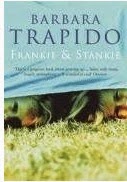
I read another thought-provoking book in Frankie and Stankie, by Barbara Trapido. This is a delightfully-narrated account of growing up in the South Africa that existed while I was a child, the South Africa of growing apartheid seen through the eyes of the child of white liberals who nevertheless mingled with the rest of white society - though they took a dim view of the Afrikaaners, whom they saw as boorish country clods. The child-like clarity of the prose means that events happen without necessarily being interpreted; with our hindsight we are able to see how things gathered their own ghastly momentum and changed a world even as its inhabitants watched. I'm glad to have read it.

And then there was the appropriately seasonal Instructions for a Heatwave, by Maggie O'Farrell. This is the story of a family, beautifully and lovingly told, with fascinating flashbacks gradually explaining what is happening and making it possible for the family to continue. I especially enjoyed the seemingly effortless mastery of the writer, the firm grasp of tense, the fine strokes of characterisation. Set in the heatwave of July 1976 - a heatwave in London which was not, I can tell you with all the authority of a diarist, a heatwave in Dunoon - the writer keeps the heat there, oppressively present without being over-described, so that you are constantly aware of the difficulties of coping rationally with any crisis. I saved this one up for the appropriate season, and it went down a treat.

And now, chums, I'm away back to Florence. I'm not after all going to say any more till I'm finished. The sun is shining in the garden and I want to read ...

Monday, July 14, 2014

A unique privilege

On the kind of day when I look out at the rain and mist and breathe a prayer of thankfulness that I have no visitors staying, no children hoping for a visit to the beach or an adventure in the forest, I find myself reflecting - for solace, as it were - on what it is that makes being a grandparent so special. Remember, I never thought of myself as the maternal type - until my first son was born. Then I was maternal, but actually only towards him, and towards the second son who followed four years later. I still found other people's children attractive only insofar as they met my criteria, not simply because they were children, and I taught adolescents in the assumption that they were doing what the name suggests - growing older, becoming people. And I liked people.

So when my sons were men and became husbands and announced that they were to be fathers, I was not at all sure how that would feel. Maybe mothers are always like that; it's not something I've discussed. And then the babies were born and my world was turned upside down for the second time in my life. The connection to these tiny infants was unbelievable in its impact, maternal instinct or no. What today's reflection consolidated was that for almost seven years now I've enjoyed the immense privilege of a chance to experience the uncritical acceptance and love from children who seem to know, whether we meet frequently or seldom, that there is a bond that can be trusted and a love that will never be withheld. I regard it as a unique privilege, even though it is shared by other grandparents, because it is unique in any one life - unique and undreamed-of.

When we are parents, we are so busy being parents that we tend not to notice the passage of time other than in landmarks like walking, talking and teeth. Our own lives are so full with the minutiae of care that there is little time to reflect - and then the time has passed, the children are drifting out of our orbit, sharing their lives with increasing numbers of strangers, becoming people just as we did before them. There is a sense of a faint regret, perhaps, but we are caught up in the amazement that these new people came from us, and the anxiety or exhilaration that surrounds their achievements. Finally, they leave - and I think sons do this more conclusively than daughters - and the cycle begins again.

The grandchildren, that golden second chance to be with children and love them and have them smother you in sticky kisses and tell you they are going to miss you when they say goodbye, come and bring with them that added bonus of perspective. A grandparent knows all too well how swiftly that chariot careers along on its breathless wings; this grandparent has learned that every moment - even the tired, grumpy moment - has to be cherished and savoured like a mouthful of fine wine, like the perfect cadence hanging in the silence that applause will soon break.

And that is why I will walk away from other demands if my family, my two-generational family, asks me to; that is why I defer final commitment to other tasks; that is why I add caveats to most of the arrangements I make these days. For it is a fact that to be a grandmother who can tell interesting stories and supply adventures when asked, I still need to be living my own interesting life - so there are arrangements made, commitments given, and life sometimes feels almost as hectic as it was when I was a young parent.

The difference is that I can lay a great deal of it aside. And when I have to be grandma, I do.

Saturday, June 21, 2014

Cloudy morning

I started writing this before the current spell of dry weather, when I was longing for it to look and feel like summer. As the solstice is rather cloudier than anything we've seen in the past week, it seems a suitable time to finish it off and publish it...


As I step outside
the damp, birdsong air opens wide
freeing my claustrophobic brain
from the confines of waking thought
and the fears of night. Why do we
close ourselves in grey, these days
that threaten rain? I want to
sing with the birds in the promise
of the new light, the freshness of green - to forget 
to fear the darkness that awaits 
at this day’s end, at all our ends.

And in the rain-washed morning
a hidden bird repeats why
not, why not, why not?


© C.M.M. 06/14

Tuesday, June 17, 2014

Time to think ... about Synod

P's & G's, complete with MDF gallery?
By the time I finish writing this, I'm sure everyone else will have moved on. But if I had attempted a blog post about Synod at the weekend, when all the other bloggers (sounds rude, that) were getting their posts out, I would have written something I'd subsequently regret. No; I needed time to reflect. And I'm glad I did - I hope I remember to return to why later.

Having been one of the signatories to a Rule 10 motion that would have hastened us along the path to legislating for same-sex marriage in church, I was pretty fed up when the motion failed to attract the two-thirds majority that would have allowed us to deal with the subject in open debate. Synod wanted the debate - but not quite enough of us wanted it. I have a strong suspicion that the secret ballot, as we tautologously referred to it, along with the confusion resulting from a bishop-led objection to a show of hands, led to several inattentive or merely poor souls voting the wrong way - in other words, not as they actually thought they were voting.

This raises another scunner (no, auto-correct, not scanner: I'm Scottish.) The venue for this year, the once-grand and now modernised cavern of P's & G's, didn't make for the same contact with the chair as we had in the more regimented but better-lit surroundings of Palmerston Place. Punters in the middle or rear of the space couldn't communicate confusion or unreadiness without a great deal of palaver involving roving mikes and the bearers of the mikes peering into the throng to try to find the confused/challenged/challenging one. This being the case, it was more than ever important for the various chairs to speak with clarity and decision, and certainly not to rely on the overhead screens to make up for the deficiencies in their own communication skills. (People don't always cast their eyes screenwards in moments of stress, especially when they're rummaging through their Synod papers and have their reading glasses on anyway.) And, as every teacher knows, you can't simply assume that everyone is paying attention the moment you open your mouth; the table-group layout makes (again, as every teacher knows) for covert communication or simple distraction.

But the single thing that got to me this year was the sudden descent of a whole bunch of protagonists into fuzzy, warm and ultimately vapid religious jargon. And tone. There. That's it. There's a whole raft of expressions that belong in this jargon, and some others that are pressed into service and will never be quite the same again (like Francis of Assisi after Margaret Thatcher had appropriated his words).  "Unpack" comes to mind, and they're not talking about the messages (shopping, if you're not from these parts). No-one called a spade a spade, let alone a bloody shovel, and there was no place for what one commentator has described as "honest fury". Those who were feeling such fury had nowhere to go, because it would have been smothered in soft fuzziness, smiled at and forgiven.

Now, I was personally grateful for individual kindness and concern in the aftermath, even as I still raged for friends old and new whose hurt and frustration were all too apparent - but I have huge problems for this kind of institutionalised, forced gentleness. For a start, I think it betrays the god I believe in. I think it castrates the prophet and makes a virtue of passivity. And where was the passion, the leadership that would have given some sense of a vibrant community realising its past and grasping the opportunity to move into a new, juster present?

I can't at the moment think if I'm actually at the end of my time on Synod, or if I have another year to go. Maybe someone reading this will be able to tell me. The Primus gave us a sliver of hope that things may move in 2015, but who knows whereI'll be then? A friend gave me even more hope in that  his perceptions have changed post-Synod, and that is joyous news. That's the news that makes me glad I waited to post this, as there would have been nothing to redeem the situation had I leapt in. But if anyone is planning any more soft play areas for the church, any more padded "conversations", I'll be returning to a quip that was going the rounds on Facebook recently:

If anyone asks you "What would Jesus do?", remember that overturning tables is always an option.

Saturday, June 07, 2014

Of fear (with a nod to Bacon)

Does anyone read Bacon's Essay's in school any more? I doubt it. They don't really strike one as everyday fare for your average 16 year old. And yet ... I have provided a link there that leads to one of the essays, Of Death, that I read when I was in S4, one whose opening sentence sticks in my mind to this day - and I have not exactly read them regularly since. I did, however, on one occasion in living memory - in the 90s, I think - find myself being given sole charge of a wonderfully sparky group of new S3 pupils for the whole of their Standard Grade course, and filled the short month of June with a crash course in Bacon. They rose to the challenge, and when I set them the further challenge of 'doing a Bacon' over the summer holidays, came up with some wonderful almost-parodies.

And in a way, that's what I'm doing now. Only I'm not bothering to write in a Baconesque style - I doubt I could - but rather seek to examine fear in much the same spirit as Bacon might. That adventure that formed the hub of my last post - we've been dining out on it, as I knew we would, and some people - in the comments on the blog, or on Facebook, or to my face - have expressed wonder at our bravery in surviving all this. Of course, it wasn't bravery. It was necessity - and I suspect that though they sometimes coincide, that wasn't the case for us. Why? Because there was no fear to overcome.

Think back to Bacon (for of course you've checked the link by now - no?) Men fear death, as children fear to go in the dark. That's the line that sticks - and it's true, even if we'd object to the male presumption these days. But that's because we have time in which to contemplate our mortality, worry about the nature of our dying, fret about its propinquity. (I think I'm being infected ...) But when we were in that little speedboat, weighed down with boots and packs so that if we'd fallen into the sea we'd have had a job ever coming up again, all during that time when the waves were breaking over us and the cliffs seemed too close, there was really no time to feel afraid. I wasn't happy, and in fact every fibre of my being was screaming - but it wasn't in fear. No, it was screaming something like "You stupid people - this is not a good place to be! It's wet and dangerous!" - and so on, like a nagging parent you soon get used to ignoring.

Even when we had to transfer from one bouncing boat to another, all I could feel was a kind of distaste - and a strong desire not to make a fool of myself. I realise now that the latter pushed aside the realisation that people could be trapped between boats, crushed or killed - because it was afterwards that I thought about these outcomes. At the time there was a bit of swearing, the odd shriek, and obedience ("Now, lady - jump!" and I jumped). There was none of the paralysing fear that grips your gullet, gives you pins and needles in your hands, makes you want to vomit. How do I know these symptoms? Because I can get them - when I have to catch an early flight, perhaps, or when I think something awful has happened/might happen to someone I care about - not consistently or predictably, but with hideous randomness of occasion and severity, rendering me useless and nauseous and able to think only of the worst possible outcome.

Perhaps Hamlet had it all along. It's "some craven scruple of thinking too precisely on th'event" (outcome, here). I wasn't thinking of the outcome, I was thinking only of the present - or, to be more precise, I wasn't thinking at all. I was doing. Hamlet again, fighting pirates - "In the grapple, I boarded them": he wasn't thinking while he fought, because he had to get on with it; it was only when he allowed himself to fret about the morality of killing his uncle in cold blood that he was in trouble. When his uncle was obviously indulging in wickedness, Hamlet could bump him off in hot blood and die content. (Sorry for the spoiler, if you don't know the story ...)

To round this off, I want to think briefly about war. We've been watching these old guys who were once young and seasick on the approach to the Normandy beaches and who are now lauded as heroes - and yes, they are heroes, and survivors, and human, and ordinary, all at once. When I was a post-war child, listening to my parents' stories, whether of bombs on neighbouring tenements or booby-trapped oases in the Western Desert, I used to wonder how people could bear it. How did they survive at all? Why did they not simply die of fear, curl up in a corner and never come out again? And I suspect that the answer is that when something frightening is happening to you, you get on with it. As long as it's actually happening, and you have to act in some way, there isn't time for the fear to overflow. The adrenaline has other uses than to make you feel sick.  These soldiers who landed on the beaches - they were sick with the sea and God knows what else, but when the ramps were down they were off, and they were soldiers.

And of course, I know all this - but actually I know it as I know far too many things: from fiction. From reading. But it has taken me till now, because someone else landed me in a situation that could have had a very different ending, to own the knowledge  that fear will only paralyse if you let it.

And, not to end on a moralising note, I have to confess that I've been seduced by Bacon, and may read some more of his essays before I close that tab. Because the books are gone, long gone ...

Sunday, June 01, 2014

Turkish saga - not a Saga holiday

I'm going to tell you a story. It's a true story, and it's already been told  in the form of a letter to a holiday company, but I feel the need to tell it with less restraint. Are you sitting comfortably? Then I'll begin ...

Kayaköy
It's another glorious day in the area of Fethiye, Turkey, the second last day in a week of guided walking among the hills of the this beautiful place. Our group, the one doing the more challenging walk of the day, has enjoyed a morning hike over the hills into a lovely valley, a lunch of mezze and beer and Turkish coffee, an amble down the road to see some Lycian tombs. Now we are going to be taken to the entrance to the deserted village of Kayaköy, where our Turkish guide will show our leader - who is new to the area but has a map, of sorts, and instructions - which route to take in order to end up on the right path to get us all, eventually, to the Blue Lagoon at Olu Deniz. So far, so ...

So bloody disastrous, actually. For this is where the story really begins. Bear with me.

We feel we're  being rushed through Kayaköy, the village that inspired Louis de Berniere's novel "Birds without Wings", a sad, ghostly testament to the folly of politics. If we were closer, we might be able to see our leader's worried expression and be worried ourselves - for we know he's already lost the way on an earlier walk. But we take our photos, and wonder where the church is, the one we're supposed to be able to see inside, and by the time we arrive at the upper limits of the village the onward path has been chosen and we're ready to head out of the valley and down to the sea.

For a while, it seems ok. Even when we have to retrace our steps uphill when a chosen path (all way- marked, but with varying degrees of authority) proves to be leading in the opposite direction to the way we want to go, even then we feel we might be heading, eventually, to the Blue Lagoon. After all, is that not sea ahead, is it not vivid blue, is that not a pleasure-boat we can see through the trees ...? And we come to a halt.
Not the Blue Lagoon

We are on a small cliff, beside a stone water-cistern. The path leads to the left - the correct direction - and peters out. We try a short foray, return to the cistern. Our leader by this time has disappeared down the hill. Someone has heard him mention a boat. We think it's a joke - but hey, that big pleasure-yacht-thingy is still moored below us, belting out pop music. We sit on the ground under the trees; we drink some water; some of us obey the call of nature. I check my phone - great signal, so can see Google maps ... and we're a very long way indeed from where we should be. I point this out to a few people, but it is a rule on these holidays that the Leader has to be followed and obeyed or the company takes no responsibility for you. (We later learned that the Turkish guide had been told to accompany us to the start of the hill path. Had he misunderstood?)

And so it is that we find ourselves on a small beach, with the promise of a boat. The large boat with the music is preparing to sail - but to sail out of the bay, not towards us. We can see an inflatable dinghy beside a jetty; there is a rowing-boat, and there is a speed boat with an outboard motor. We are still making jokes, wondering how many will be left behind, when a man in a sports jacket appears magically (I must have been looking elsewhere; it seems magical) in the speedboat, fires up the engine, makes a showy sweep round the headland and returns to the jetty: our lift.
Waiting for the speedboat

The boat looks ... small. I later find it has a maximum capacity of 10. We are twelve, and we have rucksacks, walking boots and poles. Somehow, we are all squeezed onto the hard plastic seats and told to hang on. Some manage to get their packs off; mine is still fastened firmly to my back. There is not a life preserver to be seen - other than the decorative traditional lifebelt in front of the tiny wheelhouse. We move away from the jetty. The man driving us turns to me. "You will get wet," he says.

I shrug. What can I do? The woman next to me gives me a spare jacket to cover my camera, make me feel better, just as a wave curls over the boat and soaks me, and her, and the other two women in the stern. The engine roars as we hit the open sea and the open sea hits us. Through sea-streaked sunglasses I can see Mr Blethers and our friend Leo, who is next to him, rise into the air as the prow lifts with the acceleration. He seems to bounce, crash down again. I duck as more sea heads my way. When I look again Leo is crouched in the bottom of the boat. She later told me she'd slid off the seat and at that point was untying her boot laces in case she ended up in the sea. To port (notice the nautical terminology), uncomfortably close, there is a grey rocky cliff - the end of the promontory we'd have had to walk over had there been a path. To starboard, the large pleasure-boat, still playing pop music, scooshes along, swifter even than us, adding its wake to the turbulence of the open sea. I can see people looking at us, smiling. I have no spare energy to curse them.

I don't know how long this goes on. There is little to hold on to, and I am soaked. I have my hat clasped over my camera which is strapped to my chest; my poles are in my left hand and with my right I'm straining to keep hold of the plastic side of the hull (fibreglass?) I feel there is a strong possibility that I may throw up. Then the engine slows, and the sea stops coming in beside us: we are in Olu Deniz bay and the beach lies ahead. The beach ... sloping quite steeply into the waves, which are breaking enthusiastically, the beach where there is ... no sign of a jetty.

Before the significance of this can register, I become aware that our gallant rescuer, still unsullied and unsoaked in his sports jacket, is on his phone. And gradually, as we cruise in gentle circles just beyond the surf, we realise that he is negotiating our transfer to another boat, one with a prow gangplank that will let us land without risking his boat. The first to offer is rejected as being too high out of the water, with no scramble nets (come on, you're joking ...) but another, smaller craft is approaching. (I'm a strong swimmer. Would it be better to swim?)

Now I need you, dear, empathising reader, to picture this moment. You may have been lulled into imagining a boatload of fit, lithe forty-somethings having an adventure, but it's time for the reality check. There may be as many as four of us under the age of 60, though I doubt it. I know that at least three are 70 or over, and that the oldest is 75. Normal pensioners we are not - we have already hiked at least 40 miles of Turkish countryside over the past four and a bit days. But transferring from a small boat to a larger one in a lumpy sea is not easy, and this is a truly unpleasant moment.

I am in the last four to make the transfer, as we have been in the stern. I have just watched the oldest of our group, an indomitable Irish Californian woman, launch herself onto her belly on a table in the bigger boat. Now it's my turn. As our boat rises on a wave, our driver shouts "Go, lady!" I put my foot onto the side of the bigger boat, shove my poles ahead to give me two free hands, grab the rail of the big boat. At that moment, the speedboat - and my left foot, on which my weight is still balanced - drops a couple of feet and I am left stranded, hanging on like grim death, my right foot on the big boat, my rucksack pulling me back,  and my right knee bent at a tighter angle than it's experienced in a decade. I can see Mr B's anxious face suddenly vanish as he is pushed aside by some macho soul, then a young Turkish seaman grabs my belt and pulls and I find myself sprawled in the bar of the boat we've boarded.
Preparing to land

It isn't quite over - no sooner are we all aboard when the cry goes up that we've to remove our boots and prepare to enter the water. (After all that ...) The gangplank can't reach the beach, but is waving in the air about four feet out in the surf. So I end up edging along an increasingly slippy gangplank, now holding my boots and socks in one hand (along with my poles) and the rail of the gangway in the other. The Normandy landings flash into my mind as I take the hand of a seaman and jump - and find myself scrabbling up the shingly sand onto dry land.

And there, best beloved, I shall leave us, lying like beached whales in a row just above the surf line. It has not been what we signed up for, on this walking holiday, but I will admit one thing.

It makes for a great story ...

Wednesday, April 30, 2014

Exam stress? What exam stress?

I have a feeling that Scottish school pupils are sitting their English SQA exams today. If not, it was yesterday - we retired teachers become quite hazy about these once crucial dates - and, incidentally, I'd be fascinated to see what the new English exam paper looked like, if anyone reading this can tell me. But the discussion on the radio took me further back, as I was suddenly overcome with the sensation of being 17 and in the middle of my own Highers.

I am one of the age group who sat the very first Scottish O-Grade. Because I attended a selective senior secondary school, in the double-language stream, we were told that we would merely take such O-Grades as were deemed necessary for us individually, "in the by-going" as they said. No exam leave as such - just the day of the exam itself. We all sat Arithmetic; I also took the exams in Physics, Chemistry and Maths (not my best subjects, so an insurance policy) as well as Geography (which I would then drop until S6).

So my memory of being 17 actually slipped back to one day in S4, when I was 16. I think it may have been yesterday's sun that did it; I sat O-Grade Arithmetic on a glorious sunny morning in Hillhead High School and then I took off. I met my mother at Queen Street station at lunchtime - she coming from the school where she taught mornings, I fresh from the sums - and we hopped on a train to Edinburgh. There we climbed Salisbury Crags, sat in the sun, and went for our tea before the train home. It was my first taste of freedom.

And it was this freedom that came back to me as I listened to people recounting their exam horrors, the stress they were under, the nerves and the late night studying and the lack of sleep. I honestly remember nothing of these. I recall the freedom of being alone in the empty house with hours of study before me - for we did have exam leave in S5 - and the chance to do what I wanted when I wanted. As the sun moved round to the back garden I would take my chemistry notebook outside to swot equations (I never really understood chemistry, so everything had to be learned by rote. I scraped a Higher). I grew tanned and relaxed, though there was always some turquoise ink staining the hand I'd used to cover what I was learning. I'd take afternoons off and walk the half-hour or so to school for orchestra practice, sauntering in as the bell went at 4pm, enjoying seeing friends and adored music teachers as we rehearsed for the Glasgow Music Festival (unaccountably, this was always at the end of May, so we were actually working our butts off at the same time as studying; I actually found the tension of the Festival much worse than that produced by exams).

By the time I reached my last exams (what were they in S5? French? Chemistry?) I had been off school for perhaps a fortnight and was bored with my holiday. Yes, I did last-minute revision, but it never felt more than a kind of obligation. Maybe we'd been so rigorously pushed in class that we knew most of the stuff already. The Hamlet stuff I'd mugged up so assiduously went out of the window when I saw the question (about Shakespeare's tragic heroines - I ask you!) and switched regretfully to comedy with Twelfth Night; the Latin was its usual slightly worrying breeze of being finished almost an hour early (I never liked going over what I'd written in an exam). I always assumed, I think, that I'd pass - even in the subjects I was destined to scrape through I never believed I'd actually fail - and I was eager to get on with orchestra and end-of-term nonsense and being out in the sun with my pals. (Hillhead in these days had open corridors ...)

So my memories clashed happily with the programme on the radio as I wandered in and out of the sunny garden and felt 17 again. As to whether I'd care to be 17 again ... that's another matter.

Ah. There's something I forgot to mention: I experimented with cigarettes, in exam leave. Daring, huh?

Friday, April 25, 2014

Cascading across the years ...

Next week there is to be a meeting in Pitlochry - a Cascade Conversation called Listening across the Spectrum. Cascading I understand - I was once sent on a course on managing stress, on the understanding that I would share with my colleagues in school the insights gained over four sessions. Perhaps it was my failure to induce a hypnotic trance in my cascadees that rendered the cascading less than fruitful; I did enjoy the afternoons away from the weans, and found the experience of being almost-hypnotised fascinating but that wasn't really the point. But this conversation won't be about stress, and I shouldn't imagine it will be facilitated by a hypnotherapist. No, this is part of the process for discussing same sex relationships throughout the Scottish Episcopal Church.

What - again, do I hear you ask? Well you might, especially if you have nothing to do with church circles. But I'm saying it too. I was invited to attend this conversation, and part of me is deeply scunnered that a standing commitment prevents my going - but part of me is cheering quietly. Why? Because it's years - yes: years - since I asked the previous Bishop of Argyll when we were going to begin the so-called "Listening Process" in our neck of the woods; it's years since the powerful day of intense conversations in Oban led to a province-wide day in Stirling. It's almost two years since our Synod threw out the Anglican Covenant. I don't think I can bear to pussyfoot around the same elephant in the room again. What are we playing at?

This is what it says in the most recent online InspiresThe Cascade Conversation is being held because the subject of human sexuality is one on which there are differing views and because it raises controversial and challenging issues not just for the Scottish Episcopal Church but for all denominations.  During the Cascade Conversation, it is hoped that participants will engage with the subject, and with one another, in a way which synodical procedure does not always permit. In trying an alternative way of addressing a complex subject such as human sexuality, it is hoped that the Church as a whole will both learn and benefit.

And that sounds just fine, doesn't it? Or does it? What do we actually mean by "trying an alternative way of addressing a complex subject such as human sexuality"? I shudder to think. In my no doubt naive and thoughtless fashion, I long ago reached the realisation that the faith I had come to well into my adult life meant that I was going to have to get away from the comfortable and the customary and do things that part of me shrank from - like lying down in the road in front of a foreign power's nuclear sub base, for example, like standing up in a court of law and saying yes I was a Christian and that yes in moments of extreme provocation I would use bad language to a police officer (the Sheriff thought that was perfectly reasonable, since you ask), like making political speeches from the back of a lorry, like going on telly. And it meant also that I was going to have to stand up for justice and truth and fairness in society - and in the church.

I have to confess that I've shed much of the respect for form and authority that I had half a lifetime ago. So any injunction that what transpired in the confines of an assembly was to remain secret would tend to have the opposite effect on me - because I've had enough of hugger-mugger discussions and decision-making. People find it difficult to accept that some of their fellow-Christians are different from themselves? Tough. I find it difficult to accept that some of my fellow-Christians are narrow-minded bigots. I find it really tough to keep a civil tongue in my head when provoked. And I really, really struggle to love people who behave in an unlovely fashion - and that includes myself. But I look at congregations and I see in them gay people, with and without partners, and I see people like me who have been a part of the conversations in the wider church, and I wonder: why are we ignoring this elephant in the very rooms it currently inhabits? Why do we need to wait till conversations between carefully selected people have taken place before we learn more and learn to be more whole? Are we so terrified of the real struggle that loving and understanding will involve?

And it's that struggle that matters. If this Cascade Conversation is going to pour over the church (see - I'm expanding the metaphor) in such a fashion that it will sweep away complacency and sheer bloody ignorance and will in its place bring understanding and a sense of shame for the awfulness of our past  attitudes and an urgent desire to right the wrongs done to LGBT Christians over the years, then it will be a joyful flood indeed, and I shall be deeply sorry not to have been a part of it.

I'm not holding my breath. But I'd love to be proved wrong.


Tuesday, April 08, 2014

Luke 10:38

It is late afternoon. The sun is heading for the rim of hills behind the village. The dust rises from the footfall of the arriving walkers. The woman is clearly eager to offer her hospitality as she bustles out to invite them inside her white cube of a house. They fill the room, which is already dark with the departure of the sun; Martha lights the oil lamps that sit on the shelf, on the long wooden table. The room fills with the smell of maleness, of dust, sweat, mingling with the not dissimilar smell of a vegetable stew, in which there are pieces of goat meat - slightly stringy, but a welcome addition for hungry men. There is bread, baked this morning, already toughening in the dry air, and rough red wine. A jug of water, earthenware, chipped. The voices are guttural, deep, with a counterpoint of Martha's shrill encouragement to eat, there is more - and to Mary to get up and help her. Jesus' voice is clear. She should stay.
                                 
                                                                     * * *

That wee lassie must be the younger sister - look: she's sat down on the floor. Martha's clearly stressed by all this clutter of visitors - she wants help. I don't blame the wee one, though. We can listen to Jesus all the time - she's snatching her chance. What a shame - now she's blushing, scrambling to her feet ... hey! He's put out a hand, he's stopping her going. Bit harsh, though, to say that - if Martha sat and listened too we'd all get no supper. There's no easy answer, but I'm glad there's someone willing to do the necessary.

                                                                     * * *

I want to listen. This is the most important moment in my entire life. I know Martha is trauchled, but... and I think one or two of these men think I should be serving them more. But when Jesus says I've chosen the better way I'm overcome - all the guilt evaporating in a burst of joy. Or is it smugness ...?


From Iona retreat, March 2014

Friday, March 28, 2014

The Well

©Sieger Köder
It is a well, God, a pool
so dark as to show me only
myself. It draws me to look 
compels my absorption
demands my irretrievable commitment
to its depths. And there
within that dark mystery
I am at once lost and no longer
alone. Can there be returning
to the brightness of a sunlit
morning? I think not. Will it feel
like loss? Or will the fearful leap
reward me with the companionship for ever
of the love that in the shining air
I wear like a wound?
The ripples spread on the darkness that
enfolds my falling soul.


©C.M.M., Iona, March ’14        


A second product of meditation on retreat on Iona. A response to an intriguing postcard as well as an even more intriguing - and to some disturbing - video.

Tuesday, March 25, 2014

Greylag - a poem out of meditation

 Eileen Lawrence: Greylag 1978
GREYLAG : watercolour and handmade papers

It disturbs me, this feather, plucked
from a hurrying greylag goose, or
caught by the wind’s impetuous 
wing and now quiet on the
artist’s page. I see myself in
the sharp-cut shine of the
leading edge, the vulnerable
wisps from deeper down, 
close to the panicked heart of things.
But that swift-curving quill - what
can I see in that but only
the Spirit’s arrow, clear and keen,
piercing the soul but in its arc
the colourless strength
that keeps me whole?

C.M.M. Iona, March ’14.


On our recent retreat, we spent time in silence. Sometimes we had a visual aid for our meditation, and this card was the first of these. 

Sunday, March 23, 2014

Churchgoing, anyone?

I came across this post in my 'drafts' folder, and had a sudden memory of a Blogger failure which prevented me from posting it. Never one to let a bit of writing slide into oblivion ...

I had cause a few days ago to think, not for the first time, about what it is that makes people go to church. I mentioned the question in a recent issue of the SEC magazine Inspires, when I wrote about a young child's reaction to services full of colour, music and exotic scents, but I'm not going to think about young children today. Indeed, when people talk about the need to have children in church, I often think rather of the need to have their parents there, especially in a town that young people tend to leave for further education and not return to until they are parents themselves. So what is it that a forty-something finds to draw them to a church? Or someone in their 50s, or a pensioner who suddenly discovers in himself a hunger to be more serious?* And what keeps them there? And why should they bother at all?

People who know me - or indeed who have read this blog over the years - know that I came to church through music. That sounds simple, but it's misleading. Music was the vehicle, yes - but I was singing the music, not listening to it. So am I still in church forty years on because of music? Not really. I am fortunate in that when I go to my own church I know that I can rely on the organist to meet my standards and supply the conditions under which worship is possible - but I'm married to him, and this isn't possible for the rest of the congregation. Not all at once anyway. I still like to sing - preferably plainsong or music of the Renaissance - but I'm not in a church choir on a regular basis. And I do not care to have to listen to a choir as part of my participation in the Eucharist - I long ago decided that the fun there is in the doing rather than the passive listening. It becomes positively painful when the choir isn't up to the music they sing, just as it is trying to have to listen to a poor organist.

So music can't be the whole story, can it? Time to stop thinking about myself, to consider the people among whom I worship and the church where I have been a member for the whole 40 years since I fell off my donkey. The institution, the people and the atmosphere have changed enormously in that time, and give me hope for the future. So what is it that trails us up that trying hill, to the not-very-easy carpark, to the church-that-could-be-warmer, at the very back of the town where it peters out into the hills?

Here's a list of attributes that I perceive as being the reason for people to come to a church - and to come back again. For a start, the atmosphere should be welcoming. Not just on the part of the official person at the door giving out the books, but of everyone else too - not intrusively, not oppressively, but welcoming so that the visitor can decide how much of herself to commit in conversation afterwards, feels able to ask questions. And it should be a safe place - safe to be sad, joyful, mad; safe to weep or to laugh; safe to ask for help. Ideally, the human nastiness that lurks in us all should be kept well out of the public arena: no bitching in the pews, no glares or sniffs because someone forgot their place in the rota or sat in the wrong seat. And there needs to be no self-importance on view - an inflated ego in the wrong place in a church setting can put the fragile enquirer right off their scone.

Do we come to church because we are always sure we shall be entertained or swayed emotionally? It might be pleasant to say 'yes' to that, but it wouldn't be true. What would be true, however, is that people come to church to be loved, loved for themselves and as themselves; that the people of God will reflect the love of the God they are there to worship; that in that setting, be it never so chilly or lacking in adornment, the combination of liturgy, music, prayerfulness and mystery will open a door to the bright places beyond. When that happens, it is no longer a question of why people come to church.

No. When that has happened, the question - one that is asked if for any reason someone is missing on a Sunday - that question will be a different one: why are they not there? Is something wrong?

And I believe I am fortunate, for after all these years in one church, I believe we are becoming that place.

*Philip Larkin: Churchgoing

Saturday, March 22, 2014

Meditation, corncrakes and rattling slates

People who follow me on Twitter will have realised from my sparse tweets that I've been away. In fact I've been on a 3-day retreat on Iona, one of the last places in Scotland where you find 3G phone connection, with such a sporadic signal to my Vodafone iPhone that all I could manage was the odd text message and wait for the signal to show before I hit 'send'. I think I could have managed the odd peek at Facebook, except that Facebook chose that week to demand my password, which of course I'd forgotten. So, quite unintentionally, it turned out to be a far more complete retreat for me than for any of my companions - and I found out how it's actually communication via my computer that keeps me up at night. For the first time in ages I was averaging a full 8 hours' sleep and still wakening before the alarm went at 7am.

I haven't been on a proper retreat for ages. Even my own Cursillo weekend - the last time I went off on a holy break and had people look after me - was over 13 years ago. Every other similar time away has involved me in some kind of work, usually providing some kind of service for others. My last silent retreat was in the '80s, I think - unless you count the one on Cumbrae where a certain blogger and I found silence in the same room challenging (it had to do with the ticking of the clock ...) So when the diocese offered some of us who had done facilitation work over the past few years a reward in the shape of a retreat in one of the diocesan retreat houses, I took it up, along with two others and a wonderful retreat leader.

I don't intend to go into the details, though I shall publish the writing that came out of the sudden focussing of my brain (it was a tad surprised by the opportunity, I think). But looking back, I notice how hard it was at first to switch off and then how much harder to switch back on again on our return. Both experiences were strangely exhausting in their own way. I realise that the first evening, when I was beside myself with the effects of a day that had begun at 5.30am in Dunoon, landed us on Iona in time to attend an unexpected concert in the Abbey at 1pm and had me scrambling up a dun before we even began our retreat, I was actually lulled into relaxation by staying up to talk for an hour after I'd started heading for my room. It all depends on the talk, and the surroundings (in this case, the gallery of Bishop's House chapel, which is used as a quiet room but is also the upstairs route from one end of the house to the other).

This was not a silent retreat. We had silences, but we also had intense discussion and some hilarious mealtimes. We walked, in sun and in gale-driven rain, and we ate scones in the middle of the afternoon (I don't do afternoon tea). We were well fed, our dietary peccadilloes well cared for. We met another guest who arrived for dinner on our second day; it turned out he knew my #1 son from university days. (We'd just been talking about degrees of separation ...) I was allowed to sing - the Lent Prose and other joys - in the chapel. I slept like a log even when the slates on the roof round my little room were rattling in the gale that would prevent us getting off the island on our planned ferry.

On our departure morning, we sat in the new residents' sitting room and waited to hear if the ferries would go on later. We watched as it crept out from its mooring on Mull and headed for Fionnphort. By the time it was making for Iona, we were halfway down the road, our cases preceding us on the back of a tractor-drawn trailer. We had to dash through the sea onto the ferry ramp, and were fairly hurled into the cabin by a random lurch of the boat. The crossing took twice as long as usual, as we made a deep V-shaped course into and with the waves. We were not sick.

The three of us who were there learned, I think, something about ourselves and something about each other - even though we've known one another for years. It was a wonderful experience.

And we saw two corn crakes scuttling under the hedge beside Bishop's House. Joy!

Sunday, March 02, 2014

Of straight talking and overturning tables

Over the past 40-odd years I've found myself back in the position in the choir stalls of Cathedral of The Isles which gives this view - the sunlight from the stained glass colouring the marble of the pillar, the corona of candles that we weren't allowed to light when I was young lest wax fall on the floor. That has changed - we seem to cope with the wax these days - but nothing else does, and it's a peaceful vision for me to sustain the mind's eye as I write. I am not, you understand, in Cumbrae right now, and if I were I would not be able to sing a note, suffering as I am from a cold that has more or less silenced me ...

Perhaps that's why I'm blogging again - the frustration of not being able to speak, the space to read what people are writing and to reflect for myself. And I've been thinking some more about this absurd position I find myself in, belonging all these years to a church which is now, I believe, shutting itself off from the message of the gospels as firmly as it is shutting itself off from society. Yes, I'm thinking about the Equal Marriage situation, but I'm not going to go on about it right now.

What bothers me is that my years in the church have brought me into contact with so many people whom I like and feel concern for. My choice - made in this very spot I've pictured - to go along with the sudden conviction that what I'd been singing about and hearing about had meaning for me, a choice that led to confirmation and all the tortuous journey that has followed since, now lands me in a place where I can't just let it go, let people think it's ok to set up talking shops and to procrastinate and hope that the problem might dangle quietly till it's no longer their responsibility, let my period of involvement in the wider church end without doing my best to make a difference. And that's probably going to land me in a jaggy place, where either I will offend people I would prefer to have with me, or I will be deeply pissed off by their being patronising or dismissive.

When I was in my 30s, I felt very new and very inexperienced in the governing bodies of the church. (I'm talking the Scottish Episcopal Church, for any new reader who stumbles on this). I listened to elegant cassock-clad figures (one with Dundrearies adorning his aquiline features) and wondered at the enthusiasm for rewriting canons just so. The man sitting next to me took snuff periodically, and I felt I was living in a dream. Sometimes, it struck me that these men who were running the show were less than kind to one another, and I wondered about that. They did it so ... subtly. I found it illuminating, but I had little to say for myself. Half a lifetime later, I know most of the people who tell us what's what. I have opinions of my own. And sometimes I want to speak plainly. I want to use the language I would use in my professional life, I want there to be no doubt and no obfuscation. Only thing is, people often find that difficult. Aggressive, even. Not ... nice.

I spent some time every year of my teaching career on that word "nice", so I'm using it here with a heavy dose of irony, using it in the way I taught generations of pupils not to use it, using it to point out what I think is wrong with the church right now. Think of the things that are not "nice" in church circles and you'll see what I mean. And then think of what "being nice" entails in the way of not saying exactly what you mean, of hiding behind words and platitudes and pious expressions of brotherhood, of not upsetting people.

And then remember that it probably wasn't "nice" to have your table overturned and your money scattered over the ground - and wonder what has become of the church that follows the man who overturned the tables. Society has got there before us, I fear.

Tuesday, February 25, 2014

How long, O Lord ...?

I've been putting off writing for myself about church and state and same-sex marriage. I've exploded, once, on the Primus' blog; now I think it's time to work out what is, a couple of weeks on, still explosive. And my main feeling, reading and listening, picking up rumours about the SEC process with the issue and so on, is that I'm ashamed. I haven't walked out of the church - not yet, anyway - but I'm not happy about claiming kinship with people who can write, carefully and thoughtfully, something like this:
But it produces an interesting situation for churches and faith groups who, like the Scottish Episcopal Church, have a historic position expressed in our Canons – or church law – that marriage is between one man and one woman for life. That is our position. We expect our clergy and our members to acknowledge and respect it – even if in some cases they do not agree with it and aspire to change it. To change it would need a significant process over two years in our General Synod and would require two thirds majorities.

I wasn't brought up an Episcopalian. People who know me well know that my upbringing didn't really encourage anything so rash as faith, so that my confirmation at the age of 28 was actually an act of rebellion (sad, isn't it?). At that time, the Grey Book version of the Scottish Liturgy was in its infancy and a phone call from George our then bishop told me, as the youngest member of the old Provincial Synod,  not to vote for women priests. (At that same Synod, our then rector bemoaned the time spent discussing this as "unimportant".) It's as well to remember these things, and to remember that there are still people in the church who prefer to pray in Jacobean English and accept that "Father knows best" at every turn.

Why is it as well to remember? Think about it. It seems like another life to me. The young woman who stood up at Synod and demanded clarification over deaconesses who were women and deacons who held a post to which women could never aspire - that was me. At that same time the mother of someone who became a bishop in the SEC told me that it was women like me who should be going for ordination, and I was amazed. But in global terms, it's not so long ago, is it? To be precise, it's half a lifetime. And now things have changed where before they seemed immutable.

I have been going to the current General Synod for too long, as an alternate and then as an elected representative, and it's time I quit. But I long for someone to stand up and say this. Two years is nothing if there is hope at the end of it. Two years is nothing if people look seriously at a canon about a word - "marriage": stay with me - and realise that it is only a word and that it's not the word of God but a human word about a human institution that has existed since a time when people were ignorant of genetic differences.

The Primus says that we expect our clergy and our members to acknowledge and respect this historic position. No. I respect that it is history. Four hundred years ago the Church excommunicated Galileo. That's history too. We progress. We know now that people don't choose their sexuality - and a moment's thought would show the lunacy of supposing that any Christian would choose to adopt a lifestyle that would bring them so much pain and exclusion. Bit like choosing to be a woman, until recently ...

So are we going to be hung up on a historical fallacy while loving couples wait to have their union celebrated in the church they still - and God must wonder why - adhere to? Because the faith I still cling to encourages me to have hope, I still cherish a shred of optimism that someone in a position of authority will have the courage to lead the SEC back to where it was some years ago - and on, into a place where society will have less justification in consigning us to the scrap-heap of irrelevance.

And then, perhaps, I will feel less ashamed of the church that brought me, all these years ago, to God.

Friday, February 21, 2014

A high old time ...


Before it vanishes into the dream-like recesses of memory, a few words on our January holiday. We were walking with a holiday company called HF - no reason for originally choosing this lot other than the name, familiar from my parents' tales of pre-war holidays in the Highlands, but now a firm favourite. We had a week in Gran Canaria, staying in Puerto de Mogàn, which is apparently one of the prettiest of the former fishing villages on the south coast. As I've found on previous winter breaks in the Canaries, I think I would soon have been bored had we spent the entire week in this pretty village - there was a beach, and it was sunny, and there were cafés and tapas bars, but ...

But in the interior of the island there were mountains. A fantastic, volcanic landscape of huge calderas and bright green and red streaks of volcanic deposits, of steep-sided valleys and beautiful villages high on the shoulders of the mountains, where the almond-blossom told of much longer hours of sunshine than their opposite numbers far below. We spent five days walking there on wonderful paths - not your Munro-baggers' paths to a summit here or a distant peak there, but real paths built for communication, for mules and donkeys and people to pass between the valleys and the villages. Dramatic balcony paths used the split between two layers of rock to creep across the precipitous hillside; the occasional levada carried water across dry high plateaux. And we were able to walk here, to traverse ridges and ascend peaks and come down in quite another valley from where we had started, because we were being guided and because we knew that the mini-bus would turn up for us in some village square at an appointed time and whisk us back to our hotel.

I loved every minute of it. The walks, as promised, went on getting better as the week progressed, culminating in a hike to the dramatic Roque Nublo in the geographic centre of the island - we could see El Teide on Tenerife floating in the blue west from our path as we walked.  Our two leaders - for there are always two groups, so that the less energetic can choose a less strenuous option - were wonderful, setting just the right pace so that we progressed without feeling pressured, covering the miles with an easy stride that left plenty of energy for the hilarity that seemed to accompany us wherever we went. (It might give some flavour of said hilarity that one day was occupied by an argument as to whether or not Paul was riding a beast at the time of his conversion on the road to Damascus ...)

Most of our pick-up stops had a café, but whatever the day brought it ended in icy cold beer before we changed out of our boots and dusty clothes. We would march into our hotel bar like something out of a Western, and line up along the counter. Then the inevitable baths/showers/cups of tea/making sandwiches for the next day before the evening briefing and the scamper down to the neighbouring hotel for dinner. (Our hotel, where we had whole apartments as opposed to mere bedrooms, was refurbishing its dining room). We ate prodigiously and went to bed early. And then we'd rise in the chilly dawn (for it was chilly at 6.30am!) and start all over again.

We must have walked between 50-60 miles that week, and climbed or ascended several thousands of feet (people kept talking, confusingly, in metres ...). We were fit, and we all caught the sun despite our shady hats. I loved every minute of it. And I've just booked another HF holiday for May ...

Friday, January 17, 2014

This retirement lark

I think I've finally got something. Bit of an epiphany, really. It's this retirement caper - so it's been over eight years in dawning. But today, as the last light lingered just late enough on a still afternoon to tell us that the long dark nights were shrinking and the squawking herons settled into the heronry over our heads, today I realised with a great sense of release what had eluded me until now.

Think of starting a new job. It takes a while, does it not, to settle in? To feel at home in your surroundings, to work out the best route to work, to assess how much preparation or extra work each day could bring, to size up your new colleagues and make friends if you're lucky or simply decide whom to avoid and how. Retirement, on the other hand, always seemed simpler. You have that life ready and waiting for you, if you don't up sticks and move abroad or wherever; your friends are there to enjoy meeting, the books you never got round to reading lie waiting, enticingly ...

And yet. It's actually not like that. I don't think I ever had the status angst that I have seen in newly-retired men - that can clearly be a hard thing, but I never felt that my job was me. Perhaps the eight years out of the classroom while I produced and brought up babies gave me a different slant - for work never felt quite the same after that, and I never got used to being trapped indoors on a sunny day; something I never fretted over as a young teacher. But what I did do was fill up my days with Other Things - often loosely connected to my old job, or a kind of offshoot (like speaking in public, because you've done it for years). I tutored, I wrote exam papers, I went on committees, I did some facilitation, I wrote for fun and for commissions. I did a bit of learning - theology, mostly, not the Greek I'd promised myself - and realised how much my brain had changed since university. I became quite ... busy.

Too busy. That was at the heart of today's epiphany. Too busy, and too stressed by some of it. I realise that there are things that successful secondary teaching does not equip you for. I think I'm too impatient for several of the retirement jobs I've tried, and I've realised that I need - yes, need - to spend some time every day out in the open, walking. That takes time, and it's incompatible with travelling for two hours there and back to some meeting or other. The physical fitness that is the result of this need is exhilarating, and the satisfaction of knowing you've just hiked for two hours (like today) us comparable to anything else I do or have done. I've seen the herons and heard their raucous treetop shouts; I've heard the oyster-catchers in the quiet loch below; I've smelled the amazing incense-smell of eucalyptus and pine trees in the still air; I've had a therapeutic conversation as we walked (at about 4mph, if you're interested).

Next week I'm going on holiday. More walking, only in warmer weather. 19ºC today, I believe. We've just booked another one later in the year, and a much grander one waits in 2015. We've made arrangements to see family; we plan to see paintings with friends; we have a concert to go to in the spring, and we have two concerts of our own to sing in. I feel cheerful about all these things, and not stressed. And that's the secret.

When your displacement activities have the irritant effect of a job you don't enjoy, when you find yourself reading nonsense because you're distracted by some task you have to deal with, or someone else's expectations - that's when you have to stop. You retire because, physically, you're not up to it any more - you react to stress differently for a start. You don't need to feel guilty because someone asks you to do something and your first reaction is to quail. (Do you know anyone who tutors in English...?) If you've stayed up till 1am blogging or reading or watching a film and the next morning dawns dull and wet there's no shame in having an extra hour in bed if you've left the day clear of huvtaes. You've earned this time.

And you never know when it will end.

I still enjoy the writing, though ...

Tuesday, December 24, 2013

Stormy anticipation

It's more or less dark now, this Christmas Eve, and I can no longer see the waves crashing over the pavement of the East Bay in Dunoon. I can, however, see the lights of our lifeline Western Ferries as a ship makes the crossing to The Other Side (we always think of it with capitals; somehow it seems to emphasise otherness...) after being off for several hours over high tide, and I can tell even without looking that the winds have eased off a bit.

 I have been fascinated for several hours now by this interactive map , of which this is a screen grab - taken just now, as the storm moves off to the north east. At the height of our cut-offness, we were, it appeared, living in the windiest part of the globe and I felt small and vulnerable stuck up here in my study looking out over the turbulent sea.

But now I can start to feel the excitement of Christmas Eve building in me as I contemplate the shock of leaving a warm house to head further up the hill to church, the thrill of the dark church and the candles, and the privilege of singing with our quartet that will open the Midnight Mass. For the past 39 years this has been my Christmas - the tension and the joy in the darkness - and only when it is over can I relax.

Kids, get that champagne on ice!

Friday, December 20, 2013

Mamma Mia, or what happens when you run out of tenors ...

You have to laugh. All these years of singing - it's a good 50 years since I last sang in the Hillhead High School madrigal group, at the time the acme of my singing career - singing said madrigals, to say nothing of masses, introits and anthems, hymns, funeral sentences ... I won't go on. You get the picture. When I was in my early 20s my ambition was to sound like Alfred Deller, and I got pretty close, even if in the doing of it I sang sharp because I wasn't using my whole voice; when I sat Higher Music in S6 I was made to sing soprano and cope with Gretchen am Spinnrade, inter alia. Since then I have been a sort of alto in various ensembles, from the St Maura Singers (a quartet, still singing together) through the New Consort of Voices (a group formed in Glasgow University, in which I met Mr B and in which we both sang till we left Glasgow for the wild west) to the Hesperians. This last was a four-part choir that we formed within six months of our arrival in Dunoon - we put the word out in the school and contacts formed quite literally on the street, and one September evening we hired a room in the school and waited. Within 30 minutes we had sufficient voices to cover the parts, and six months later performed Vivaldi's Gloria in public.

Eventually we ran out of tenors. The Americans left Dunoon, and some of our men with them. Age took its toll on others. We disbanded the choir and concentrated on church music. And then, years later, we retired - and behold: the women who had been young newcomers in the last years of the Hesperians wanted to sing again, and 8+1 was formed. Eight women, one man. Now there are ten of us, and the name is merely that and no longer a description.

And all this history is to tell you why you have to laugh. Because 8+1 can and does tackle the kind of music which has been my life all these years - but that's not all we do. And it's because we do other stuff that two weeks ago we sang a set of songs from ABBA's Mamma Mia, with a backing track, at a Christmas Party in Benmore Gardens Gallery, and are still the talk of the steamie. (These days, the steamie is the supermarket, where yesterday I met the organiser of the event: "best ever", she said.) It was completely OTT, that performance, because the backing track (yes, we have a backing track) got stuck on "High" and Mr B couldn't get it down before the one-page intro finished with the result that this choir of women, only one of whom is under 40, had to belt out the songs as if we were in the movie. We had not a microphone among us, but we made a helluva sound and we loved every moment of it.

Worse is to follow. I had never been a fan of ABBA (too old) and I hate musicals. I had to learn these blooming songs from the sheet music while everyone else was singing them from past knowledge - and "Waterloo" on the page ain't easy, rhythmically speaking. But now I've got them - and I'm stuck with them. For the past month I find myself singing snatches of Abba as I walk round the shops or hike up a glen. I fill silences with sudden bursts of song. I am handed a copy of Carols for Choirs and sing "Thank you for the music". No wonder ABBA were/are so popular. I shall never be the same again.

Now - where's that copy of "A spotless rose..."?

Saturday, December 07, 2013

Mandela and a legacy


In the passing of Nelson Mandela, among the tributes and the claims and counter-claims (remember, he was a terrorist/he was no saint/there was the Malcolm X side too you know), I found myself discussing what we thought during these years when we were young and Mandela was in prison. What did our parents say? Did they speak of South Africa? Did they approve of the regime there, take it for granted?

My mother was born in Pretoria. She returned to Scotland as a young child, too young to have many memories other than the story that she had a nurse who dropped her once. But she had grown up with my grandmother’s stories - the stories of a young woman being sent a Cape ruby by a man she hadn’t seen for two years, with a proposal of marriage and instructions to get it set in an engagement ring, a young woman from the Aberdeenshire countryside who sailed off to be reunited with this man, marry him and live in a small house with a corrugated iron roof. She used to tell me of how she loved to visit “Jo’burg”, and how she stood her kitchen table with its feet in cans of petrol to deter the ants, and how she worried that her skin would turn yellow with too much sun. But in the end it wasn’t these irritations that drove them home; it was the day that the boy who brought their vegetables warned them that he probably wouldn’t be there the following week because he was going on a march with Mr Gandhi - and he was right. He was imprisoned, and that was that.

So these stories came to me, from my mother and my grandmother, woven into the background of my own life. But they impinged more directly on two occasions. In 1961 - as far as I know - my mother had to choose whether to have South African or British citizenship, when South Africa left the Commonwealth. I remember my father joking about it, though there was really no doubt. It must have been shortly after that that she received a letter from a man she had been friendly with in the South African Club at University: could he bring his wife and daughter to visit, as they were about to visit the UK for the first time since the war? And so it was that they came and had afternoon tea in our house, all very polite and formal. (The man by this time was an Admiral in the South African navy, according to my father). 

This was my first experience of a real, tension-inducing, verbal adult ... row. As I sat trying to make conversation with a girl of my own age whose Afrikaans accent was almost incomprehensible, I became aware that the adults’ voices were rising slightly, and not in the riotously jolly way I knew from my parents’ parties (mostly teachers). There was talk of “blacks” - even “Kaffirs” - and I could see that my father was about to launch one of his deadly diatribes. When it came, it was eloquent, short-lived and final. Our guests left. We tidied up the tea party while I learned exactly what the problem had been. For the first time in my life, aged 16 or so, I understood.

Understanding brought with it a recognition of how my home differed from that of many of my friends. My parents were left-wing Glasgow teachers, intellectuals who loved an argument, who expected their children to take an interest and join in meal-time discussion - though my mother always insisted that nothing too contentious was allowed to disrupt the digestive process. (By the time I left school I knew what an ad hominem argument was, and that it was an inferior form of debate.) 

I know how fortunate I was. To grow up knowing that justice and debate and equality and self-knowledge and moral courage are part of the furniture, the fabric of one’s life - there is no gift I would rather have been given than that knowledge, and none that I would care more about passing on to my own family.

But that is for them to recognise, for I doubt if parents ever know.


Meanwhile, an era has passed and South Africa has to progress without the father who has watched over the country for the past quarter-century. Children, in fact, recognising their legacy.